
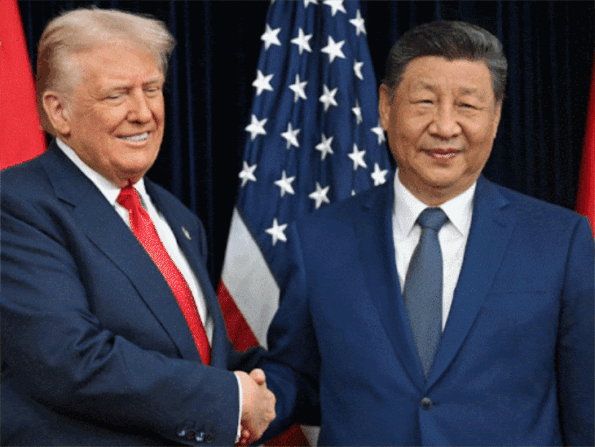
US President Donald Trump and other high-level members of the American delegation reportedly destroyed temporary phones, discarded gifts and avoided carrying personal electronic devices during their recent visit to China, highlighting longstanding American concerns over cybersecurity and espionage risks. Officials travelling with Trump to Beijing used only ‘burner phones’ and were instructed to dispose of or destroy them after returning to the United States, The Mirror US reported. The delegation also reportedly used temporary or ‘burner’ email accounts throughout the trip as part of broader security precautions, the report added. Gifts, badges and souvenirs discarded before departure Before boarding Air Force One to leave Beijing, members of the US delegation allegedly disposed of several items received from Chinese hosts, including: The reports further said that officials were instructed not to carry any China-origin items aboard the aircraft. Emily Goodin, White House correspondent with the New York Post, claimed on microblogging site X that, “American staff took everything Chinese officials handed out – credentials, burner phones from White House staff, pins for delegation – collected them before we got on AF1 and threw them in a bin at the bottom of the stairs. Nothing from China allowed on the plane.” The delegation also reportedly left personal mobile phones, laptops and other electronic devices at home before travelling to China. Why do officials use burner phones during foreign visits Security experts have long warned that electronic devices carried into certain countries could become targets for: Cybersecurity analysts say even switched-off devices can potentially be compromised through sophisticated monitoring techniques. Destroying temporary devices after official travel is seen as a way to reduce risks associated with compromised communications or long-term surveillance. The practice is common among diplomats, intelligence officials and senior government personnel travelling to countries considered cybersecurity risks.
What are burner phones? A burner phone is a cheap, disposable mobile phone, usually prepaid and purchased without a long-term contract, used temporarily before being discarded or deactivated. The term ‘burner’ comes from the idea that the device can be “burned” or thrown away after use. Burner phones are legal in most countries, though they are often associated in popular culture with crime dramas and espionage thrillers such as Breaking Bad and the Jason Bourne franchise. What are burner email addresses? A burner email address is a temporary or disposable email account used to avoid spam, tracking or unwanted communication. Some burner email services automatically expire after a short period, while others involve maintaining secondary long-term accounts for low-priority use. Security experts say disposable email accounts can help minimise exposure during sensitive foreign travel or diplomatic engagements. Cyber tensions remain major fault line between US, China The reported precautions come amid years of accusations between Washington and Beijing over cyber espionage and digital surveillance. China has consistently denied the allegations and accused the US of carrying out extensive global surveillance operations. The issue resurfaced during Trump’s meetings with Xi Jinping at Zhongnanhai, the Chinese leadership compound in Beijing. Asked whether he had raised concerns over alleged Chinese cyberattacks, Trump suggested both countries engaged in espionage activities. “And he talked about attacks we did in China … What they do, we do too. We spy like hell on them too,” Trump told reporters aboard Air Force One. Trump also claimed he told Xi: “We do a lot of stuff to you that you don’t know about.” Trump’s China visit ended after several rounds of meetings with Xi at Zhongnanhai, the heavily guarded leadership compound often described as the political nerve centre of China. The two leaders were seen walking through the estate’s historic gardens and covered pathways before holding extended discussions with senior advisers and interpreters.