In a life-saving intervention, doctors in Navi Mumbai have brought a woman back to life after her heart stopped beating for nearly 50 minutes, giving her a new lease of life.
The team led by Dr Gaurav Surana, who is the consultant cardiologist at NewEra Hospital, revived the 48-year-old woman who had arrived at the emergency department with chest pain, but within minutes, her condition turned critical as she collapsed into sudden cardiac arrest.
It was followed by an intense and relentless fight against time, with prolonged resuscitation efforts continuing without pause. Just when hope seemed to be fading, the team managed to revive her, turning a near-fatal moment into a story of survival through timely action and advanced cardiac care.
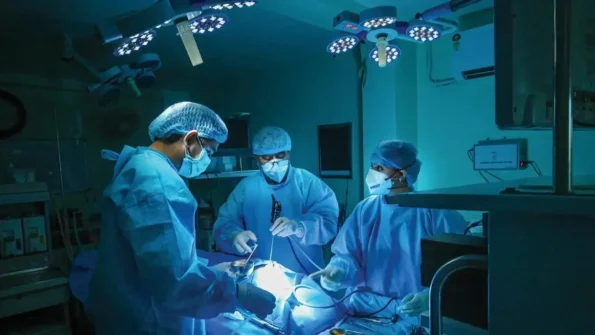
The woman Meherbi, a housewife from Vashi, came to the hospital with complaints of chest pain, uneasiness, and excessive sweating for the past two–three hours, classic warning signs of a heart attack. On initial examination, her pulse and blood pressure were stable, and she was quickly evaluated with an ECG while receiving appropriate emergency medications for prompt and effective care. However, her condition suddenly worsened. She suddenly became unresponsive, with no detectable pulse or blood pressure, indicating cardiac arrest, and immediate cardiopulmonary resuscitation (CPR) was initiated. The patient was intubated and put on ventilator support. During resuscitation, the monitor revealed a life-threatening ventricular tachycardia rhythm. The team delivered multiple DC shocks and administered emergency medications. Despite the critical condition, the team continued relentless CPR for nearly 45–50 minutes, eventually reviving her with return of pulse and blood pressure, though she required triple inotropic support.”
Dr Surana said, “This was an extremely critical case where every second mattered. The patient was admitted on April 15, and initially presented with symptoms of a heart attack, most likely due to an acute blockage in the coronary artery, and rapidly went into cardiac arrest. In such situations, the heart stops pumping effectively, and immediate action is the only chance of survival. The role of CPR is crucial, as it helps maintain blood flow to vital organs, especially the brain. At the same time, timely defibrillation becomes life-saving when there are shockable rhythms like ventricular tachycardia. In this case, repeated defibrillator shocks, along with medications, helped restore a normal rhythm. The prolonged resuscitation of nearly 50 minutes is rare, but continuous CPR and timely defibrillation made the difference.”
He further added,“Once the patient was stabilised on inotropic and ventilator support, the next critical step was to identify and treat the underlying cause. She was immediately shifted to the cath lab for coronary angiography, which revealed significant blockage in the coronary arteries. A successful angioplasty was performed to restore blood flow to the heart. Early intervention in such cases is life-saving, as delays can lead to irreversible damage or death. Post-procedure, the patient showed gradual improvement, and with intensive monitoring, we were able to reduce support over the next few days.”
Following the procedure, the woman was shifted to the ICU, where she remained under close observation. Over the next two days, her condition steadily improved. Inotropic support was gradually reduced, and she was successfully weaned off ventilator support. By the third day, she was mobilized out of bed, showing remarkable recovery. She was shifted to the ward on the fourth day and continued to improve without complications. She was discharged in a stable condition on 22/04/2026. Not treating her at the right time could have led to complications like prolonged hypoxia, low pumping lifelong, repeated Ventricular Tachycardia (VT) episodes, neurological deficit, or death. This case highlights the importance of rapid response systems and advanced cardiac care facilities,” said Dr Surana.
“The incident was extremely frightening for us. We almost lost her, but the doctors and staff acted quickly and never gave up. Seeing her recover and return home feels like a miracle. We are deeply grateful to the entire team at NewEra Hospital,” said the patient’s family.
“Timely medical intervention, advanced cardiac care, and a well-coordinated emergency response can save lives even in the most critical situations. With increasing cases of heart disease at a younger age, recognising early symptoms and seeking immediate care can make all the difference,” concluded Dr Mataprasad Gupta, vice president & CEO.