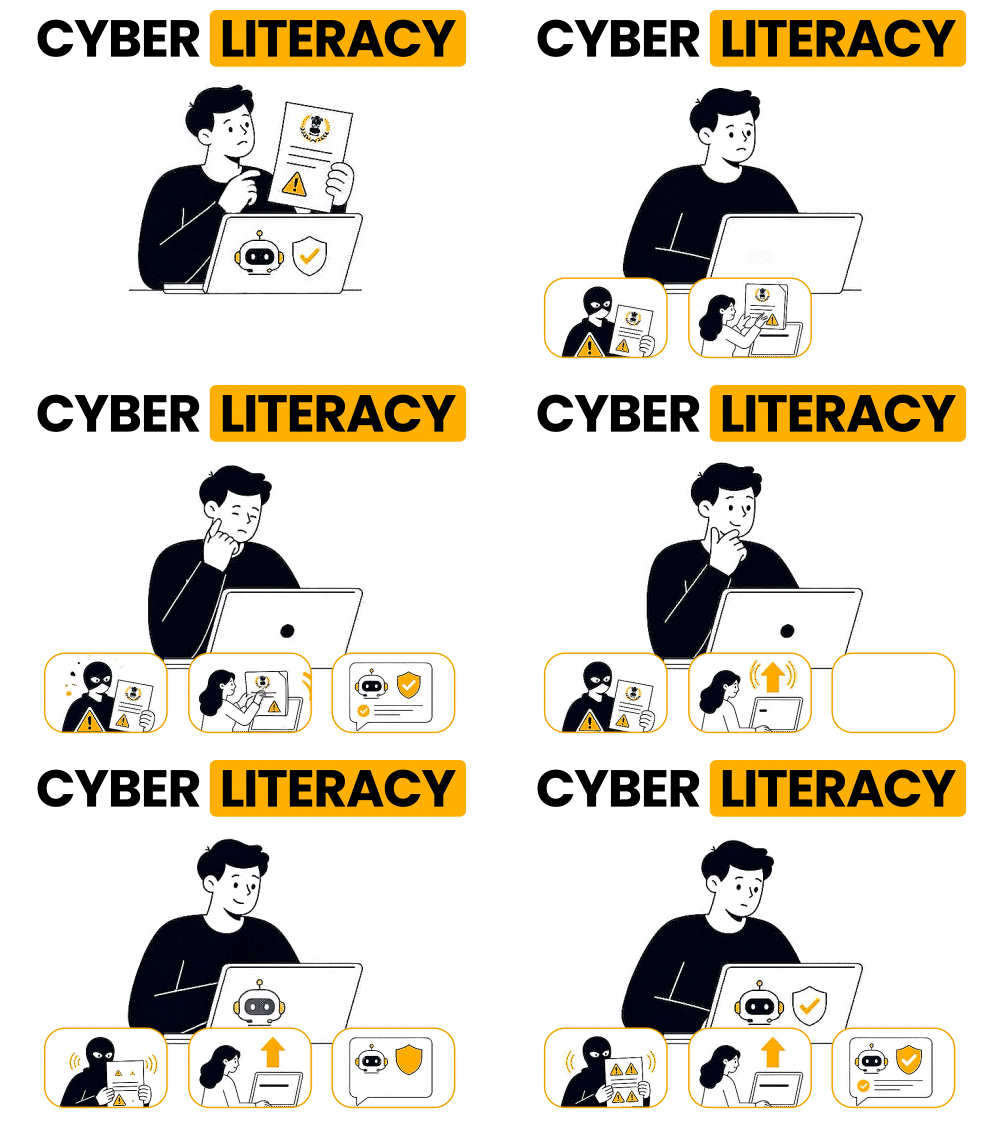
In the last few years, cases of ‘digital arrest’ scams have been continuously increasing in the country. According to the ‘National Cybercrime Reporting Portal’ (NCRP), in the year 2024, more than 1.23 lakh cases of digital arrest and related cybercrimes were registered. In these, about 1,935.51 crore rupees were defrauded. Meanwhile, in the first two months of 2025 alone, 17,718 cases came to light, in which 210.21 crore rupees were defrauded. The surprising thing is that even educated people are falling victim to this scam. Recently, the ‘Central Bureau of Investigation’ (CBI) has launched an AI-based chatbot named ‘ABHAY’. This tool will help verify fake notices sent in the name of CBI. This will help people avoid scams like digital arrest and cyber fraud. Today, in the ‘Cyber Literacy’ column, we will talk in detail about CBI’s ‘ABHAY’ chatbot. We will also know that- Question – What is ‘ABHAY’? Answer – It is an AI-based helpbot (a type of chatbot) launched by the CBI for notice verification. Question – What is the meaning of the name ‘ABHAY’? Answer- ‘ABHAY’ means – free from fear. That is, the objective of this chatbot is to make people aware, vigilant, and fearless against cybercrimes. Question- Why was it launched? Answer- In the last few years, cases of digital arrest, fake CBI notices, video call blackmailing, and fraud in the name of government agencies have rapidly increased. To prevent these, the ‘ABHAY’ chatbot has been launched.
Question- What kind of platform is this? Answer- This is an AI-based real-time notice verification platform that allows common people to check the authenticity of notices received in the name of CBI. This means people can verify notices online themselves. Question- Is this only for CBI notices? Answer- Yes, currently it is primarily designed to check notices sent in the name of CBI. Question- How will it work? How can a person verify a notice? Answer- For this, one has to go to the ABHAY chatbot through the official website. See the complete process in the graphic-
Question- Will it converse like a chatbot? Answer- Yes, it will work like a helpbot (a type of chatbot) and will guide the user through the verification process. Question- Will AI be able to identify fake notices? Answer- Yes, the AI chatbot will help identify suspicious notices by analyzing their pattern, format, and details. Question- Will verification also be done by scanning QR codes? Answer- Currently, CBI has not officially provided information about the QR scan feature. Question- Will it work in real-time? Answer- Yes, the chatbot has been designed for real-time notice verification. Question- How will data be kept safe in the ABHAY chatbot? Answer- The verification process will take place through CBI’s official portal. Therefore, it can be said that the data will remain safe. However, complete information about this has not been provided yet. Question- Can the AI system perform incorrect verification? Answer- Yes, there can be a possibility of error in AI systems as well. Actually, chatbots are developed through a learning process. These bots use their intelligence based on that learning. Therefore, official confirmation is necessary when required. Question- Can cybercriminals misuse this system? Answer- No, since this bot has been developed by the CBI, its generative access is only with the CBI. Therefore, scammers cannot misuse it. Question- Will this reduce fraud? Answer- People will get help in verifying the truth of the notice, which can reduce cases of digital arrest scams. Question- Can other departments also bring such a system? Answer- Yes, if needed, other agencies can also develop such verification platforms. Question- What is digital arrest? Answer- This is a method of cyber fraud, in which fraudsters impersonate police, CBI or other government agency officials to scare and threaten people. They say ‘you are under investigation’ and then try to get money transferred. Fraudsters create mental pressure on the person through video calls, fake notices and threats. Question- How to identify a fake CBI notice? Answer- Always check such notices on the official website. See the red flag graphic for fake CBI notices-
Question- Why do cybercriminals use the names of government agencies? Answer- People trust the names of police, CBI or government agencies and quickly get scared by notices received in their name, following all instructions without verification. Question- Who are the most targeted people? Answer- Cyber fraudsters usually target people who are less aware, more online active, or easily scared and pressured. See in the graphic below who cyber fraudsters target the most-
Question- Do fake notices only come via email? Answer- No, fake notices can also be sent via email, WhatsApp, SMS, Telegram or video calls. Question- If you receive a notice in the name of CBI, what should you do first? Answer- In such a situation, pay special attention to some of the points given in the graphic-
Question- By what signs can you identify a fake notice? Answer- You can identify them by these signs-
Question – Do legitimate investigative agencies ask for money on video calls? Answer- No, no legitimate investigative agency asks to transfer money via video call. Question- Should OTP or bank details be shared? Answer- No, OTP, bank details, or passwords should not be shared under any circumstances. Question- What to do if the notice seems suspicious? Answer- Don’t panic. Do not share money, OTP, or personal information. Also, follow the points given in the graphic-
Question- Is it safe to download screen sharing apps? Answer- Downloading a screen sharing app at the behest of an unknown person can be risky. This can allow cyber fraudsters to gain access to the phone. Question- What should an elderly person do if they receive such a notice? Answer- First, explain to them that there is no need to panic. Ask them to immediately inform their family. Also, tell them not to share money, OTP, or bank details under any pressure. Call cyber helpline number 1930 to register a complaint.