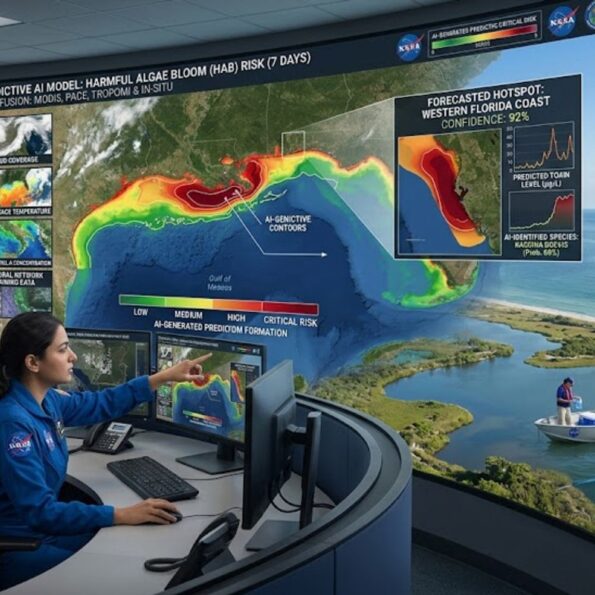
Imagine being able to predict an environmental disaster before it happens. That’s exactly what NASA is trying to do with the help of artificial intelligence (AI) and satellites. The space agency is using advanced technology to detect harmful algae blooms early, giving scientists and authorities more time to respond before they threaten water supplies, wildlife, and human health. As climate change continues to warm water bodies around the world, harmful algae blooms are becoming more common. NASA believes that combining AI, machine learning, and satellite data could become a powerful tool in protecting ecosystems and improving water quality. What are harmful algae blooms? Harmful algae blooms, often called HABs, occur when algae grow rapidly in lakes, rivers, reservoirs, or coastal waters. While not all algae are dangerous, some species release toxins that can harm humans, fish, birds, marine animals, and even pets. These blooms are becoming more frequent due to rising temperatures, pollution from fertilizers, and changing weather patterns linked to climate change. In severe cases, toxic algae can contaminate drinking water, damage fisheries, and disrupt entire aquatic ecosystems. How NASA is using AI to track algae blooms Traditionally, scientists have relied on field surveys and water sampling to monitor algae growth. While effective, these methods can be time-consuming and expensive. NASA is taking a different approach. The agency uses Earth-observing satellites to collect data from water bodies across large regions. These satellites monitor factors such as: AI systems then analyse this massive amount of data much faster than humans can. By identifying patterns associated with previous blooms, machine learning models can help predict where harmful algae blooms are likely to appear in the future. Also read: X cracks down on stolen viral videos: Now, the original creators to get more views, engagement, and earnings
Why satellite monitoring matters One of the biggest advantages of satellite technology is its ability to monitor remote and hard-to-reach areas. Instead of relying only on local observations, scientists can track water conditions across entire regions or even globally. This provides a much broader picture of how algae blooms develop and spread. According to NASA oceanographer Paula Bontempi, satellite observations are essential for studying harmful algae blooms at both regional and global scales. This technology allows researchers to spot warning signs much earlier than traditional monitoring methods. Why harmful algae blooms are a serious threat
Some blooms produce powerful toxins that can affect the nervous system or liver. Exposure to contaminated water may cause: Large outbreaks have already been reported in countries such as the United States, Canada, and Australia. Scientists warn that the problem could worsen as global temperatures continue to rise. Nutrient pollution from agriculture is another major factor contributing to the growth of harmful algae. Also read: Stop AI from improving itself, earn up to ₹4 crore: OpenAI seeks researcher to tackle AI’s key challenge
How AI makes environmental monitoring faster The biggest strength of AI is its ability to process huge amounts of information quickly. Instead of manually reviewing thousands of satellite images, AI can automatically identify patterns linked to algae growth. This helps researchers detect potential problems sooner and improve forecasting accuracy. NASA is also working with universities and environmental agencies to develop machine learning models that can predict bloom behaviour based on historical data and weather conditions. A new tool for climate and water protection
NASA-backed research shows that AI can improve environmental forecasting and help scientists monitor water bodies more efficiently.
While AI cannot prevent harmful algae blooms, it can detect them earlier, reduce monitoring costs, and help communities prepare for climate-related environmental threats.
As climate-related challenges continue to grow, technologies like satellite imaging and machine learning are becoming increasingly important. NASA’s work shows how space technology can be used not only for exploring the universe but also for solving problems here on Earth.