For the average Indian woman crossing 45 years of age, the subtle changes in her body are often dismissed as the inevitable ageing. But what is frequently labelled as a slowing metabolism is actually a high-stakes biological disappearing act. As estrogen levels retreat during perimenopause, the very muscle that anchors a woman’s strength and metabolic health begins to vanish, fundamentally altering the body’s internal architecture.
This National Protein Day, which is observed on February 27, mid-day debunks myths of the traditional Indian diet and revealing why the standard dal-chawal routine is failing women when they need strength the most. We aren`t just talking about nutrition; we are talking about a medical necessity.
Sandipa Sen, senior clinical nutritionist at Manipal Hospital, and Suvarna Sawant, chief dietician at Nanavati Max Super Speciality Hospital, highlight how to bridge the menopause muscle gap.
The science of the vanishing act
To understand why protein becomes a medical priority after 45 years of age, one must understand the role of estrogen. As Suvarna Sawant explains, “Estrogen is essentially a muscle-protecting hormone. It facilitates muscle protein synthesis—the body’s internal repair shop—and keeps systemic inflammation low. When estrogen declines, the body’s anabolic (building) signals weaken. The system begins to break down more than it builds, often mobilising amino acids from existing muscle to fuel other bodily functions. The result? Even if the number on the scale stays the same, lean mass (muscle) is replaced by fat. This shift not only changes how clothes fit but fundamentally slows down metabolism, leading to the stubborn menopause belly.”
Conquering the afternoon slump: from biscuits to brain power
Indian tea-time is traditionally dominated by refined carbs: biscuits, rusks, and fried namkeen. Sen points out that this habit fuels the brain fog and sugar cravings common in perimenopause.
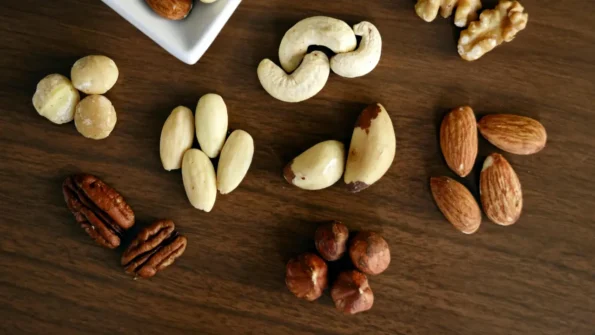
“We should replace namkeen and biscuits with protein and fibre-rich snacks that provide genuine satiety. Roasted makhana, roasted channa, seeds, nuts, and sundal are great additions. Avoiding fried snacks is crucial, as they increase cholesterol and contribute to weight gain without offering any cellular nourishment,” says Sen.
The muscle-bone axis: Why calcium isn`t enough
For decades, the narrative for ageing women has focused almost exclusively on calcium. However, Sen highlights a critical oversight in the traditional Indian approach: you cannot build strong bones on a foundation of weak muscles.
The role of protein in bone architecture
Bones do not simply support the muscles, but they are a living matrix. “Protein is the primary driver for collagen formation and tissue repair. Without adequate protein, the scaffolding of the bone weakens,” explains Sen. She outlines common issues that can arise among women:
1. Osteopenia and osteoporosis: Brittle bones that lack structural integrity.
2. Increased fracture risk: A major concern for the elderly as estrogen protection fades.
3. Chronic fatigue: Where the body lacks the raw materials to repair daily micro-wear.
Collagen: The secret force multiplier
Collagen acts as the biological glue for our musculoskeletal system. It is the major component of tendons, ligaments, and fascia (the connective tissue surrounding muscles). “Strong connective tissues improve the transmission of force from muscle to bone. This improves overall performance and stability. When you combine collagen-rich nutrition with resistance training, you create a synergistic effect that further stimulates muscle protein synthesis,” says Sen.
The mechanical pull principle
The health expert makes one point crystal clear. “You cannot have strong bones without strong muscles pulling on them. This mechanical pull of muscle on bone stimulates density,” she asserts. To support this, she recommends collagen-rich precursors such as:
1. Bone broth (chicken or mutton)
2. Vitamin C sources: Amla, oranges, guava, and lemon (to aid collagen synthesis)
3. Plant proteins: Pulses, beans, and green leafy vegetables.
Timing and the bolus strategy
A common mistake in Indian households is saving the heavy meal for dinner. However, the body cannot store protein the way it stores fat or carbs. According to Sen, muscle protein synthesis (MPS) is best stimulated when protein is distributed evenly. “The goal should be roughly 20 to 30 grams of protein per major meal. This bolus approach across three major and two minor meals ensures better glucose control, muscle preservation, and a higher thermic effect (burning more calories just by digesting),” she explains.
Debunking the supplement stigma
Is protein powder a gym bro luxury? “Not for the woman over 45 years. While women in this age bracket need 1 to 1.2 grams of protein per kg of body weight, most Indian women struggle to hit even 30 to 40 grams total,” Sen notes.
She further adds, “A high-quality whey or plant protein isolate is a practical tool when dietary intake is inadequate.” For those still wary of commercial powders, she suggests a homemade protein mix: a blend of roasted makhana, channa, nuts, and seeds added to milk, soup, or buttermilk.
The dal chawal myth
Suvarna Sawant brings a necessary reality check to a beloved Indian staple. While dal chawal is a complete protein in a strictly biochemical sense, the proportions are often skewed.
“A standard bowl of dal chawal is roughly 70 to 80 per cent carbohydrates. While this may suffice for a highly active 20-year-old, it is inadequate for a woman over 45 facing anabolic resistance. This is a state where muscle cells become deaf to the signals that initiate repair,” she cautions.
When asked what can women approaching menopause add to their diets, Sawant responds, “To flip the switch, women need Leucine—a specific amino acid found in higher concentrations in dairy, eggs, and lean meats. For vegetarians, the solution isn`t to quit dal-chawal but to change the ratio: double the dal, halve the rice, and add a side of paneer, curd, or soya to hit that leucine threshold.”
Why you must pick up weights
Both experts agree on one non-negotiable truth: Protein alone cannot fix the muscle gap. “Exercise increases muscle protein synthesis. Resistance training, such as lifting weights, stimulates muscle protein synthesis far more effectively than protein alone. With that, it prevents frailty and improves bone density. Many Indian women do their household work (moderate activity), walk regularly, but avoid strength training,” Sen explains.
While walking is excellent for cardiovascular health, muscles require progressive overload to grow. Sen recommends using:
1. Resistance bands
2. Dumbbells
3. Bodyweight exercises (squats, lunges, push-ups)
If you increase your protein intake but remain sedentary, the excess calories may simply lead to fat gain. Resistance training is the “key” that unlocks the protein’s potential to build muscle.
Quality versus quantity: Not all grams are equal
“50 grams of protein from paneer are absorbed differently than 50 grams from chicken. The quality of the protein also matters as it ascertains how well it is absorbed and the amino acid profile, especially the leucine content. Animal and milk protein has more leucine than other vegetarian sources, which is why it triggers muscle repair more effectively,” Sawant highlights.
She says that vegetarians must be more strategic, combining different sources to ensure a complete amino acid profile across the day. “Vegetarians can opt for soya, sattu, and if necessary, some whey protein supplement after consulting a dietician to meet leucine targets. One can also combine different plant based and vegetarian proteins across the day such as dal, soya, dairy, grains etc. to help improve the overall quality,” Sawant suggests.
Conclusion: Eating smart, not eating less
The middle-age spread is not a sign to starve yourself. “In fact, aggressive calorie cutting without adequate protein often accelerates muscle loss, further tanking the metabolism,” warns Sawant.
The goal for the Indian woman over 45 is a shift in philosophy: from eating less to prioritising protein. “Protein and fibre intake should be improved to have a proper sustainable weight loss and managing feelings of hunger and satiety. By pairing a protein-forward diet with consistent resistance training, women can navigate the menopause transition not with frailty, but with newfound strength and vitality,” she concludes.