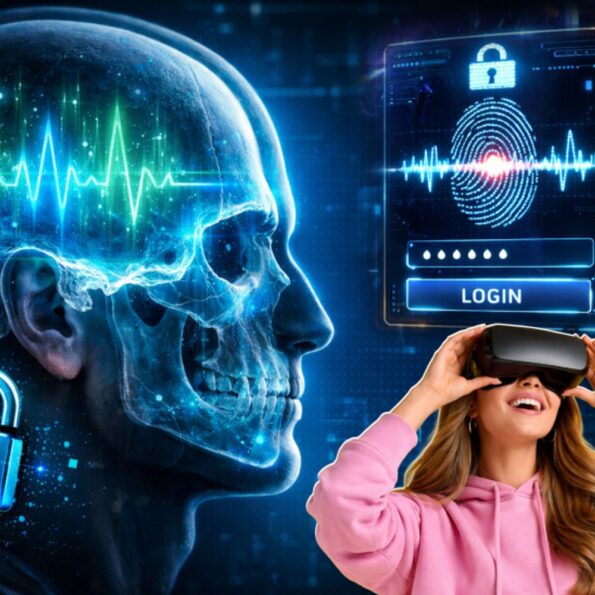
Remembering passwords for dozens of apps and websites is tiring. Even password managers don’t solve everything. Biometric methods like fingerprints or eye scans help, but they also raise privacy concerns. Now, scientists have introduced a new idea: logging in using the tiny vibrations inside your skull. A new system called VitalID uses signals created by your heartbeat and breathing as they travel through your head. These vibration patterns are unique to each person just like fingerprints. The technology was presented at the 2025 ACM Conference on Computer and Communications Security and is designed especially for extended reality (XR) environments. How VitalID identifies you Even when your body is still, it’s constantly moving in small ways. Every breath and heartbeat creates tiny vibrations that travel from the neck to the skull. Because each person’s skull has a different shape and thickness, these vibrations form a unique pattern. Sensors already built into virtual reality headsets can detect these signals and identify who is wearing the device. The best part? No extra hardware is needed. Researchers say the system works using software alone. Tested for accuracy over 10 Months Researchers tested VitalID on 52 users using two popular XR headsets over a period of 10 months. The results were impressive: The team also created filters to ignore movements like nodding, so the system focuses only on heartbeat- and breathing-based skull vibrations. Since these signals travel through bone and tissue, they are extremely difficult to copy. Someone might imitate breathing speed but not the structure of another person’s skull. A smarter login for virtual worlds XR headsets are now used to access personal accounts, documents, and online services. However, typing passwords with gestures can feel awkward, and two-factor authentication often breaks immersion. Eye-tracking systems also increase device cost. VitalID could solve these problems by allowing users to log in instantly and securely inside virtual environments without stopping their experience. Though the system is not available commercially yet, researchers believe it could eventually help users safely access financial platforms, medical data, and workplace systems in immersive spaces. Rutgers University has already filed a provisional patent, and the project involved researchers from multiple institutions across the United States.