
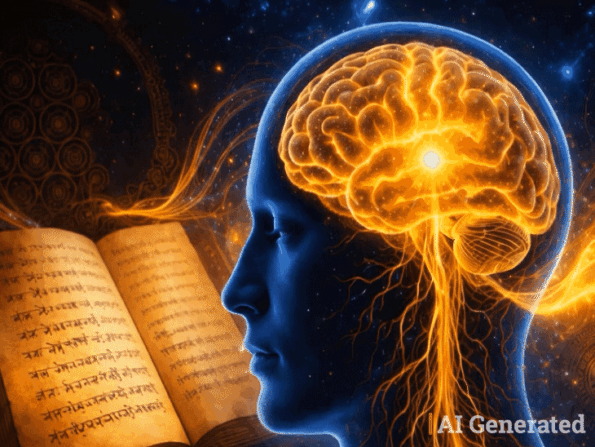
What if your brain is more than just a biological machine? What if it also reflects ancient knowledge described thousands of years ago in the Vedas? A growing idea in neuroscience suggests something surprising: the structure of the human nervous system may closely match the patterns described in ancient Vedic texts. According to researchers studying this connection, this is not just poetic imagination it may point to deeper natural laws shared by both biology and consciousness. A new way to look at the human brain Modern neuroscience explains the brain through electrical signals, neurons, and chemicals. These systems control everything we think, feel, and do. But some scientists now suggest that our nervous system may also reflect universal vibration patterns described in ancient knowledge systems. Physics already tells us that everything in the universe is made of energy and frequency. Even tiny particles like electrons behave like ripples in invisible fields. In a similar way, the Vedas describe reality as structured through sound and vibration. This raises an interesting possibility: maybe the same natural laws shape both the universe and the human body.
The 40 Systems of the Human Body Vedic literature describes 40 aspects of knowledge, and researchers suggest these correspond to 40 functional systems in human physiology. One example comes from Yoga. The concept of Yoga means “union” or “integration.” In the brain, bundles of nerve fibres connect different regions so they can work together as one system. This creates a unified experience of reality exactly what Yoga describes. Similarly, the classic work by Patanjali, the Yoga Sutras, is divided into four chapters. Interestingly, the human brain is also divided into four main lobes. This structural similarity supports the idea of deeper connections between ancient knowledge and modern biology. Did ancient texts understand the body’s internal clock? Today, science explains daily biological cycles through circadian rhythms internal clocks that control sleep, hormones, and metabolism. But ancient traditions described similar ideas through Dinacharya, or daily routines aligned with nature. Modern research shows our cells contain molecular clocks that respond to sunlight and temperature. These ancient routines may have helped people naturally keep their bodies in sync with Earth’s rotation. Were neurotransmitters described in ancient knowledge? Terms like dopamine and serotonin do not appear in ancient texts. However, similar functional ideas exist. For example, the concept of soma represents nourishment and balance within the body. Dr. Nader compares brain chemistry to an orchestra rather than a solo instrument. Modern biology uses a similar idea called the interactome, which studies how molecules work together as a system. Both approaches suggest health depends on harmony across the entire body not just fixing one part. Where ancient wisdom meets modern medicine Today’s medical science is slowly moving toward a more integrated understanding of the body. Interestingly, this direction closely matches the holistic view described in the Vedas thousands of years ago. Whether seen as symbolism, science, or both, one idea stands out clearly: The human body may not just live in the universe it may reflect its deepest patterns.