
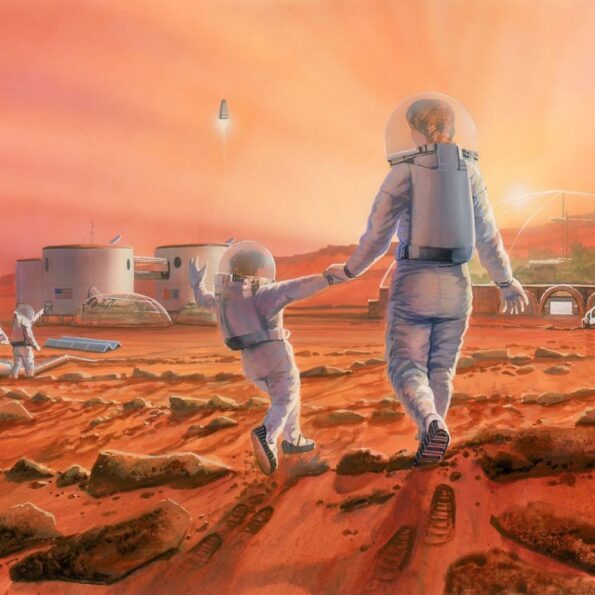
Many people dream of travelling to space. Some even imagine living on the Moon or Mars one day. Building human colonies beyond Earth is one of the most exciting goals of modern space exploration. But there’s one major question scientists are still trying to answer: can humans actually have babies in space? A new study suggests this may be harder than we thought. Why reproduction in space is a challenge Researchers from the University of Adelaide studied how microgravity affects sperm movement in mammals, including humans. Their findings showed that sperm struggle to navigate properly in zero-gravity conditions. This matters because sperm must travel through the female reproductive tract to fertilise an egg. If they lose direction, the chances of pregnancy drop significantly. In the experiment, scientists used a special device called a 3D clinostat, which simulates weightlessness by constantly rotating cells. They placed sperm inside an artificial maze designed to mimic the female reproductive system. Under these conditions, many sperm failed to find their way compared to normal gravity. Interestingly, the sperm still moved normally but they lost their sense of direction. Fertilisation becomes less effective in Microgravity The study also tested mouse sperm and found another concern. After spending four hours in simulated zero gravity, sperm fertilised 30% fewer eggs than usual. Researchers also observed problems in early embryo development: The first 24 hours after fertilisation are critical for healthy development. During this time, important genetic processes begin. Microgravity appears to disrupt these changes, making normal growth more difficult. A possible solution scientists are exploring The study found that progesterone, a hormone important for pregnancy, helped sperm regain their ability to navigate. When researchers exposed sperm to higher levels of progesterone, their performance improved to near-normal conditions. Scientists also confirmed that healthy embryos could still form in simulated space conditions. This suggests that reproduction in space may still be possible in the future. Why this research matters for future space colonies Understanding reproduction in space is essential if humans plan to live beyond Earth long term. Settlements on the Moon or Mars would eventually need families, not just astronauts. For example, Elon Musk, founder of SpaceX, has long spoken about building human settlements on Mars. More recently, he suggested creating a “self-growing city” on the Moon within a decade. Research like this helps scientists understand whether such plans are realistic in the long run. It also has another practical benefit: future space colonies may rely on animals for food production. That means animal reproduction in space must also be possible. What this means for humanity’s future in space? Scientists are still learning how space affects the earliest stages of life. While challenges remain, the latest findings offer hope that reproduction beyond Earth may one day be possible. If humans truly want to become a multi-planetary species, solving this mystery will be one of the most important steps ahead.