[[{“value”:”
The NGMA Mumbai has opened “Colours of Swades: From Haripura to the Constitution,” a special exhibition dedicated to Nandalal Bose (1882–1966), marking the first time the gallery is presenting a dedicated show on the artist. The exhibition was inaugurated by Aditi Tatkare, Maharashtra’s Minister for Women and Child Development.
`Colours of Swades`
Venue: NGMA Mumbai, Sir Cowasji Jahangir Public Hall, Fort
Time: 11 am to 7 pm (closed on Mondays), daily until 9th June 2026
Fee: Entry is free, and all artworks are displayed for public viewing only; none are for sale
Celebrating Nandalal Bose
Nandalal Bose is widely regarded as a pioneer of Indian modern art. A student of Abanindranath Tagore and later principal of Kala Bhavana, Santiniketan, Bose believed that Indian art should grow from its own soil rather than imitate Western styles. Over his career, he developed a unique visual language drawing from classical traditions, folk practices, and daily life, influencing generations of artists. In recognition of his contribution, he was awarded the Padma Vibhushan, India’s second-highest civilian honour.
Speaking about the exhibition and its cynosure: Nandalal Bose, IAS Nidhi Choudhari, Director – NGMA Mumbai, shared, “The show traces the artistic and intellectual journey of Nandalal Bose, one of the foremost pioneers of Indian modern art. It is particularly special for us at NGMA Mumbai because the Haripura Panels of 1938 are being displayed here for the first time. The exhibition brings together two defining moments in Bose’s practice – the Haripura Panels that celebrate the vitality of rural India, and his work on the illustrations and visual design of the Constitution of India. Together, these works remind us that during the freedom movement, art was not merely decorative; it played a profound role in shaping the imagination and identity of the nation.”
She further added that Bose shaped Indian modern art by drawing on Ajanta murals, folk traditions, temple sculpture, and rural life, creating a visual language deeply rooted in Indian culture yet strikingly modern.
The Haripura Panels: Life in rural India
One highlight of the exhibition is the Haripura Panels (1938), created for the Indian National Congress session at Haripura, Gujarat, created under Mahatma Gandhi’s request and guidance. The seventy-seven panels created by Bose depict farmers, artisans, musicians, women at work, and village life, rendered in bold lines and vivid colours inspired by folk traditions reflecting Bose’s belief that the true spirit of the nation lay in the everyday lives of its people.
These works celebrate the dignity and rhythm of rural India while marking a landmark moment in modern Indian art, highlighted Shruti Das, Deputy Curator at NGMA Mumbai.
Bose and the Constitution of India
Another key aspect of the exhibition is Bose’s role in designing the illustrations and decorative borders for the original Constitution of India. Collaborating with his students at Santiniketan, he created images tracing India’s civilisational history, from the Indus Valley Civilisation and the Ramayana to the Mughal period and the freedom movement. These illustrations make the Constitution not just a legal document, but a work of art, history, and national identity.
Curatorial perspective and digital interpretation
The exhibition is curated to show the connection between art, culture, and nation-building. Shruti Das, explains that the show links two critical moments in Indian history: the Haripura Panels and the Constitution illustrations, highlighting Bose as both a master artist and cultural visionary.
The exhibition also includes digital interpretations of the Haripura Panels, created with AI assistance by filmmaker Ebyug Akhil, bringing the rural scenes to life and providing an interactive experience for younger audiences.
Key people who inaugurated the Exhibition
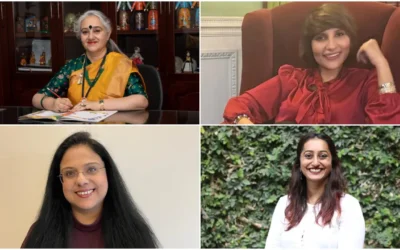
The exhibition was inaugurated by Aditi Tatkare, Maharashtra’s Minister for Women and Child Development. Also present were Nidhi Choudhari, Director of NGMA Mumbai; Shruti Das, Curator of NGMA Mumbai; renowned art historian Dr. Saryu Doshi; philanthropist Dr. Aneel Kashi Murarka; international guests Kaneko Toshihiro and Aliaksandr Matsukou; Him Chatterjee, Vice Chancellor of Sir JJ School of Arts; Rajiv Mishra, Principal of Sir JJ School of Arts; prominent art collector Kishor Jhunjhunwala; and artists Prakash Bal Joshi, Varsha Karale, Nayanaa Kanodia, and Sanjukta Barik, among many others.
“}]]