
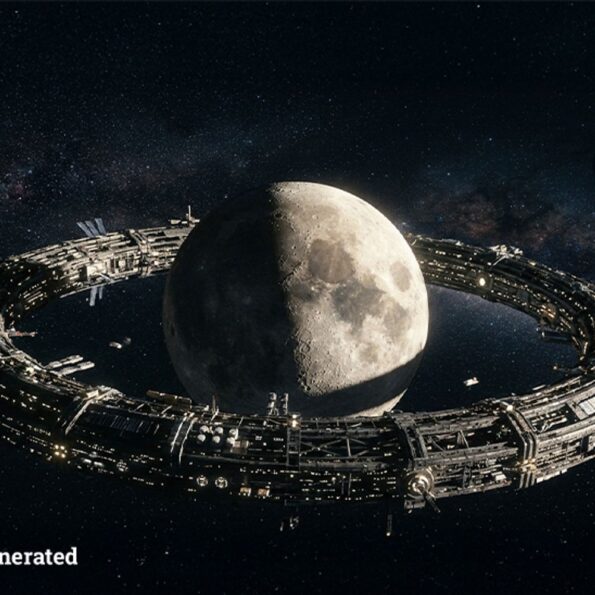
No clouds. No night. No fossil fuels. Just nonstop clean energy from the Moon. This may sound like science fiction, but more than a decade ago, a Japanese construction company proposed exactly that. The idea is called the Luna Ring a massive belt of solar panels stretching around the Moon’s equator to generate continuous power for Earth. The project first appeared quietly before 2011. But after the Fukushima nuclear disaster, interest in safer and cleaner energy solutions grew quickly in Japan, bringing fresh attention to this unusual space-based idea. What is the Luna Ring? The Luna Ring is a proposed 6,800-mile-long solar panel belt placed along the Moon’s equator. Unlike solar panels on Earth, lunar panels would not face clouds, storms, or nighttime interruptions. According to the company behind the idea, space-based solar panels could produce up to 20 times more energy than similar systems on Earth. That’s because the Moon has no atmosphere to block sunlight, and one side of the equator is always exposed to the Sun. This means the system could generate electricity 24 hours a day, nonstop. How would Moon power reach earth? The Luna Ring is designed to solve one of solar energy’s biggest problems: inconsistency. On Earth, solar panels stop working at night and become less efficient during cloudy weather. On the Moon, sunlight is far more reliable. Here’s how the energy would travel: The system could even help produce hydrogen fuel, supporting a future shift away from fossil fuels toward a hydrogen-based energy society. The biggest challenge: Cost As exciting as the Luna Ring sounds, its biggest obstacle is money. Energy experts say the idea works in theory but would be extremely expensive in practice. Some economists suggest Japan should instead invest in more realistic renewable sources like geothermal energy, which is already available and cheaper to develop. Even the project’s designers admit there is no clear cost estimate yet. The technology needed to send huge amounts of power across nearly 238,855 miles of space still requires major research. The system would also need extremely accurate guidance technology to ensure microwave and laser beams hit their targets on Earth safely something never attempted at this scale before. So, why do scientists still take it seriously? Despite the challenges, the concept is not impossible. The main components already exist: The real difficulty lies in building and operating such a massive system on the Moon. Where the Luna Ring project stands today? As of the latest updates, the Luna Ring remains a concept project. It has no confirmed funding, no official backing from major space agencies, and no construction timeline. However, interest briefly increased after the Fukushima disaster, when Japan began searching urgently for safer energy alternatives. Since then, progress has remained limited.