[[{“value”:”
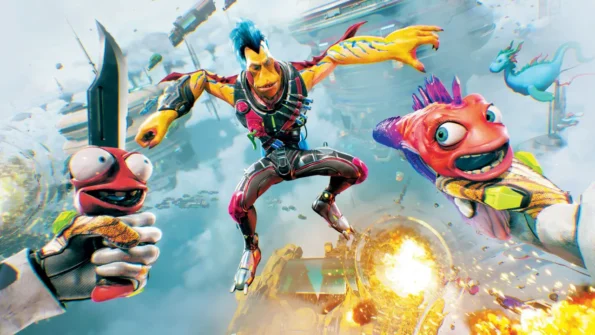
High On Life 2
Rating: 3/5
Developer: Squanch Games
Publisher: Squanch Games
Platform: PC, XBS, PS5
Price: Rs 2,400
When the first High on Life dropped in 2022, there was nothing quite like it. From the mind behind Rick and Morty, it was an aggressively lowbrow sci-fi shooter where the weapons wouldn’t stop yapping, and the jokes ranged from “why am I laughing at this?” to “I should not be laughing at this.” It was far from perfect, but the novelty, the chaos, and the comedy carried it. Naturally, success demanded a sequel. The question is whether High on Life 2 actually evolves the act or simply retells the same joke louder.
Same setup, different flavour of villain
The sequel begins right where you left off, with a brisk recap that gets you moving quickly, no lengthy warm-up routine this time. The target list returns, but the enemy shifts from drug peddlers to a shady pharmaceutical operation. The twist is that because pharma is a “legit” business (as legit as anything is in this universe), you’re not a celebrated bounty hunter anymore, you’re an outlaw. It’s a smart hook on paper, and there are at least ten ways this premise could have gone delightfully off the rails.
Unfortunately, the story doesn’t quite cash that cheque. Where Rick and Morty-style storytelling usually nails small episodic arcs while building an overarching thread, High on Life 2 feels like it’s going through the motions. It moves fast, sure, but it rarely feels sharp. There’s energy, but not enough bite.
The comedy still works… just not as often
The humour hits about 60 per cent of the time for me. When it lands, it lands hard, especially when the game embraces weird, inventive set pieces rather than relying on swearing as a substitute for punchlines. The standout moments are the ones that break structure, like the detective-style segment or the boss encounter that messes with your settings mid-fight. It’s annoying, but it’s the kind of fourth-wall silliness that reminds you why this series exists.
The misses, though, are harder to ignore in a sequel. Some jokes feel recycled, and some conversations drag. If you adored the first game’s vibe, you’ll still laugh. If you found the original exhausting, this sequel won’t convert you.
Talking guns remain the best part
The talking weaponry is still the main draw, and the voice work is genuinely strong. Travis, a depressed gun voiced by Ken Marino, is a highlight, and even if you don’t recognise the name, you’ll recognise the voice the second he opens his mouth.
Mechanically, though, the gunplay feels familiar. It’s fun in the same way the first game was fun: loud, messy, and more about momentum than precision. If you’re coming in expecting a clean, competitive-feeling shooter, you’re in the wrong orbit.
The skateboard is both brilliant and infuriating
The biggest change is the skateboard. You don’t really walk anywhere anymore; instead, you just skate. For traversal, it’s excellent. It makes getting around fast and playful, and it gives the sequel a stronger sense of speed.
In combat, it’s more complicated. In the best moments, the board adds flow, you circle enemies, keep moving, and turn fights into a chaotic dance. In the worst moments, it makes everything feel slippery and unreadable, especially when arenas get cramped or cluttered. I also didn’t love being locked into it all the time; sometimes you want to fight on your feet without feeling like you’ve wandered into an intergalactic skatepark brawl.
Performance and visuals
I played on Xbox Series X. Visually, it sticks to the same gooey, neon alien aesthetic as the first game, and that consistency works in its favour. Some areas can feel claustrophobic, but I didn’t run into anything that ruined the experience, no major progress-stoppers, and no constant technical headaches on my run. The campaign clocks in at around 10 hours, and it’s priced accordingly, which feels about right. It’s not a massive time sink, more solid gaming weekend.
Verdict
High on Life 2 is enjoyable, uneven, and very much more High on Life. The best moments are creative and properly funny, the talking guns are still the stars, and the skateboard makes getting around a joy, even if it occasionally turns firefights into a messy blur. If you loved the first game, there’s enough here to justify the return trip. If you didn’t, this sequel isn’t suddenly going to win you over. And if you’ve got Xbox Game Pass, the value proposition is obvious: it’s the kind of game you dip into when you want something loud, silly, and weird, even if the punchline doesn’t always land.
“}]]