
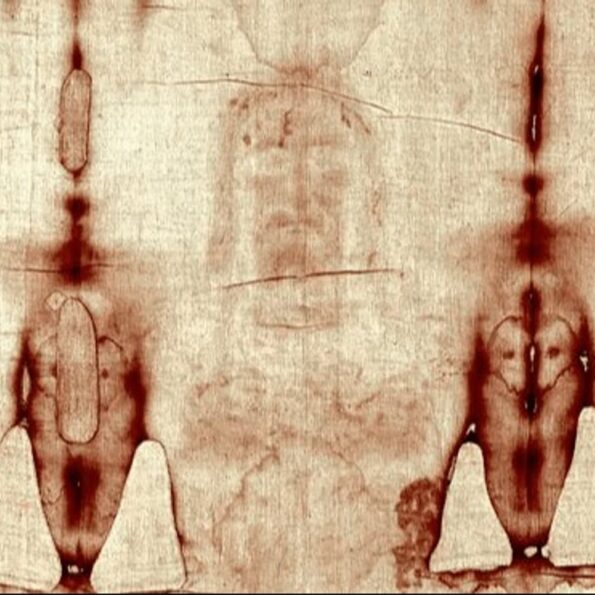
For centuries, the Shroud of Turin has puzzled historians, scientists, and believers alike. Many people believe this long linen cloth once wrapped the body of Jesus Christ after crucifixion. Now, a fresh DNA study has added an unexpected twist to its story: traces linked to Indian ancestry have been found on the cloth. The discovery doesn’t solve the mystery but it certainly makes it more fascinating. A cloth with a long and controversial past The Shroud of Turin is a linen sheet measuring about 4.4 metres long and 1.1 metres wide. It carries a faint image of a man who appears to show injuries similar to those described in crucifixion accounts. Because of this, many believers consider it the burial cloth of Jesus. However, historians remain divided. The cloth’s documented history begins only in 1354, when it appeared in the small French town of Lirey. Even then, it sparked both devotion and doubt. Later, it came into the possession of the House of Savoy and was eventually moved to Turin, Italy, where it is preserved today inside the Cathedral of Saint John the Baptist. What the New DNA study revealed Scientists from the University of Padova, Italy, studied tiny biological samples collected from the shroud during a scientific examination in 1978. Using modern genetic sequencing methods, they discovered DNA from many sources including humans, plants, animals, and insects. One finding stood out the most. Around 38.74% of the human mitochondrial DNA recovered from the cloth matched lineages linked to the Indian subcontinent. Most of the remaining DNA was connected to populations from the Near East, while only a small portion related to Western Europe. This raised an interesting possibility: the linen fibres or yarn used to weave the cloth may have originated in ancient India, especially the Indus Valley region, which was famous for high-quality textiles. Researchers had first suggested this link back in 2015. The latest analysis strengthens that earlier idea. Why Indian DNA doesn’t mean the cloth was made in India Even though the discovery sounds dramatic, scientists are being careful not to jump to conclusions. DNA can reach an object in many ways through handling, trade, travel, repairs, display, or contamination over centuries. The Shroud of Turin has been touched and studied by countless people across different regions and time periods. Researchers also pointed to ancient trade routes connecting the Indus Valley with the Mediterranean world. These networks could easily explain how Indian-linked DNA ended up on the cloth. Importantly, scientists could not determine when the DNA was deposited. It might have appeared during early Christian times, medieval trade activity, or even after the cloth surfaced in Europe in the 14th century. A cloth touched by many environments The study revealed something else just as intriguing: the shroud carries DNA from a wide variety of living things. Scientists identified traces from: This shows the cloth has travelled widely and been exposed to many environments over the centuries. The Debate Over Authenticity Continues The Shroud of Turin has never stopped attracting controversy. In 1988, radiocarbon dating suggested the linen was produced between 1260 and 1390 CE, placing it firmly in the medieval period rather than the time of Jesus. For many historians, this became the strongest evidence against its authenticity as a first-century relic. However, supporters challenged that result. Some argued that the tested sample might have come from a repaired section instead of the original cloth. Others said fire damage, smoke, restoration work, and repeated handling could have affected the dating results. The new DNA findings do not settle this argument but they do add another layer to the mystery. Not everyone is convinced yet As expected, the latest study has also faced scepticism. Some experts believe the new genetic evidence does not change the broader conclusion that the shroud is likely a medieval European object. Another important detail: the study has not yet been peer reviewed, meaning independent scientists have not fully evaluated its methods and conclusions. So for now, the results remain intriguing but not final. A new clue in an ancient puzzle The discovery of Indian-linked DNA does not prove where the Shroud of Turin was made or whether it truly wrapped the body of Jesus Christ. Still, it expands the conversation beyond Europe alone. Instead of a simple story tied to one place and time, the shroud may reflect a much wider network of trade, travel, and cultural exchange across continents. In the end, the Shroud of Turin remains what it has always been: one of history’s most mysterious and debated relics now with an unexpected connection stretching all the way to India.