
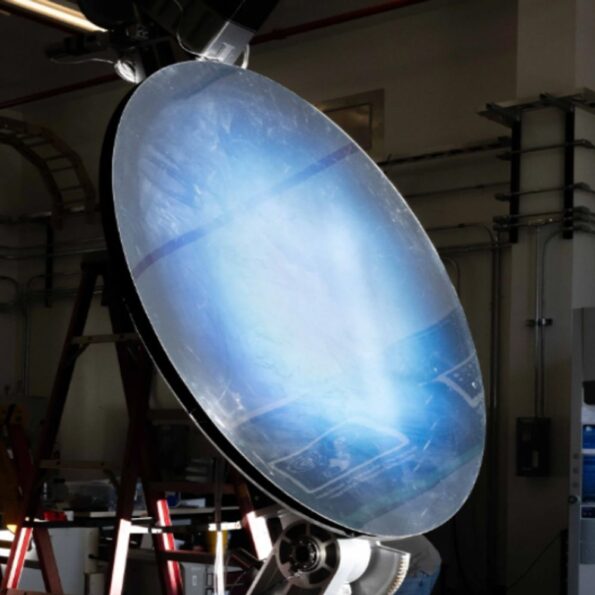
Imagine standing on the Moon and taking a deep breath, without carrying oxygen from Earth. That’s exactly the future NASA is working toward. In a major step forward, the space agency has successfully tested a solar-powered system that can pull oxygen out of lunar soil. It sounds like science fiction, but it’s very real, and it could change how humans live and work on the Moon. What is NASA’s CaRD project? The breakthrough comes from NASA’s Carbothermal Reduction Demonstration, also known as CaRD. The goal is simple but ambitious: use materials already available on the Moon to produce oxygen and fuel. Lunar soil, also called regolith, actually contains a lot of oxygen, about 40–45% by weight. But there’s a catch. The oxygen isn’t floating around freely. It’s tightly bound inside minerals. So scientists need a way to “unlock” it. That’s where CaRD comes in. How does it work? The system uses concentrated sunlight as its main power source. A large mirror collects sunlight and focuses it into a powerful beam of heat. This heat is directed into a special reactor filled with simulated lunar soil. Carbon is added to the mix. When the soil gets extremely hot, a chemical reaction takes place. This reaction releases oxygen from the minerals, producing carbon monoxide in the process. That carbon monoxide isn’t waste. It can be processed further to create pure oxygen gas and even fuel. According to NASA, the CaRD system “could enable production of propellant using only lunar materials and sunlight, which could save money on missions to the Moon.” In short, astronauts wouldn’t have to carry as much oxygen or fuel from Earth. They could make it there. Also read: Tips to safeguard yourself from Holi scams: Don’t let QR codes and festive GIFs empty your bank account
Tested in Moon-like conditions NASA didn’t just test this in a regular lab. The prototype was placed inside a thermal vacuum chamber at NASA’s Johnson Space Center. This chamber recreates the harsh environment of the Moon, extreme temperatures, and near-zero pressure. For two weeks, the system operated under these simulated lunar conditions. The result is that it successfully produced carbon monoxide using only sunlight and soil simulant, proving the concept works. Who helped build it? The reactor was developed by Sierra Space. The solar concentrator came from NASA’s Glenn Research Center. Mirrors were supplied by Composite Mirror Applications, and additional systems support came from NASA’s Kennedy Space Center. Together, they built a system that shows oxygen production on the Moon is not just a theory anymore. Why this matters for future moon missions The ability to produce oxygen on the Moon could completely transform space exploration. Oxygen is essential for: If astronauts can create oxygen using only lunar soil and sunlight, missions become cheaper and more sustainable. It also reduces the number of heavy supply launches from Earth. This technology could play a key role in NASA’s Artemis missions, which aim to establish a long-term human presence on the Moon. And if it works there, similar methods could one day be used on Mars. Also read: OpenAI signs deal with the US Department of War as Trump blacklists ‘Anthropic AI’
The global race to unlock lunar resources NASA isn’t the only one working on this idea. The European Space Agency is developing a small system designed to produce 50–100 grams of oxygen per day using solar energy. In their labs, engineers heat lunar dust with molten salt and use electricity to release oxygen. Meanwhile, Australia is partnering with NASA to send a rover that will collect lunar soil for future oxygen production plants. Private companies are also stepping in. Blue Origin’s “Blue Alchemist” system aims to use solar power to melt lunar soil and then extract oxygen through electrolysis, leaving behind useful metals as a bonus.