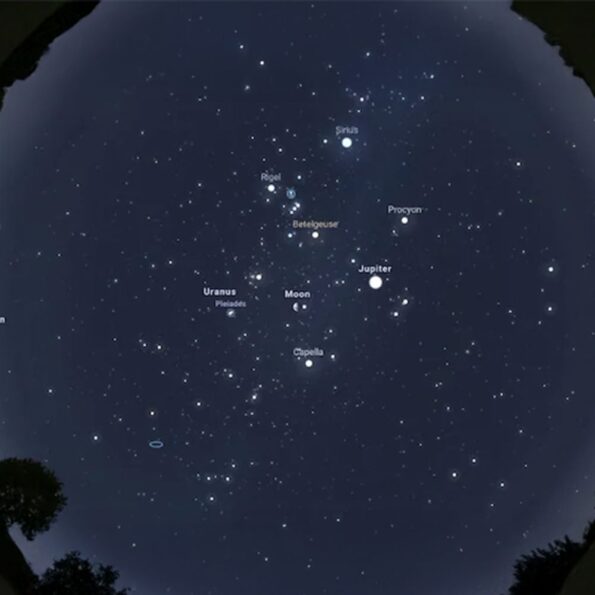
Mark your calendars and set a reminder, the sky is planning a special performance. On February 28, 2026, six planets will appear together in the evening sky in a rare celestial event often called a “planetary parade.” The best part is that you won’t need fancy equipment to enjoy most of it. Just clear skies, good timing, and a view of the western horizon. What is a planetary parade? A planetary parade does not mean the planets form a perfect straight line in space. Instead, it is a visual effect from Earth. Several planets appear close together along the same curved path in the sky, known as the ecliptic, the path the Sun seems to follow each day. Because the planets orbit the Sun in roughly the same flat plane, there are moments when they appear grouped from our viewpoint. When three or more planets are visible in the same region of the sky, it is often called a planetary parade. Which planets will be visible? On February 28, 2026, the six planets expected to line up are: They will form a noticeable arc across the western sky after sunset. However, not all of them will be equally easy to see. Also read: Instagram to alert parents if kids search for suicide terms
Will the planets be visible in India? Yes, skywatchers in India will be able to witness this event, weather permitting. Here’s what to expect: The best viewing window will be about 30 to 60 minutes after sunset. Timing is important because some planets will set shortly after the Sun goes down. How to watch the six-planet alignment Watching the event is simple, but a little preparation will make a big difference. If you have binoculars, bring them along. They will help you spot Saturn and Mercury more clearly, and are necessary if you want to see Uranus and Neptune. Also read: Google unveils advanced image generation tool ‘Nano Banana 2′,’ will instantly create 4K images
Why is this event special? Evening planetary alignments are more convenient than early-morning ones, making this event easier for families, students, and casual skywatchers to enjoy. Seeing multiple planets together without advanced equipment is not an everyday occurrence.
That’s what makes February 28, 2026, special: it offers a rare chance to view several of our solar system neighbours at a glance.