
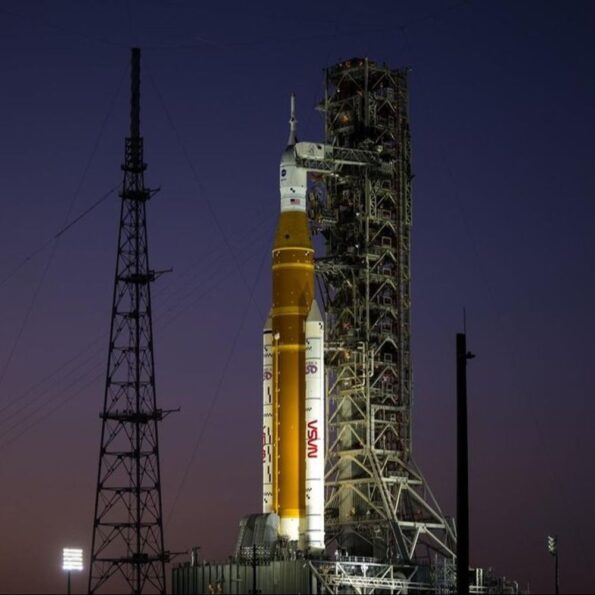
For many people who grew up watching videos of the Apollo missions, this question feels obvious: If humans landed on the Moon more than 50 years ago, why can’t we just do it again? The truth is, returning to the Moon today is not as simple as repeating history. NASA’s modern lunar program, called Artemis, is moving forward but slowly and carefully. And there’s a good reason for that. Landing humans on the Moon is still one of the hardest things humanity has ever attempted. Doing it safely and in a way that lasts is even harder. Apollo was faster but riskier In 1969, Neil Armstrong became the first human to walk on the Moon and delivered his famous line about a “giant leap for mankind.” It was a proud moment for the world. But what many people forget is how dangerous that mission actually was. The Apollo program happened during the Cold War, when the United States was racing against the Soviet Union to reach the Moon first. Speed mattered more than long-term planning. Engineers worked under intense pressure, and astronauts accepted risks that would never be allowed today. In fact, during the Apollo 11 landing, the onboard computer started flashing warning alarms just minutes before touchdown. Mission control had to make a quick decision and told the astronauts to continue. If they had chosen differently, history might have changed forever. Apollo succeeded brilliantly. But it was never designed to support regular trips to the Moon. It was more like a bold sprint than a long journey. Artemis has a bigger goal than just “Going Back” Unlike Apollo, the Artemis program is not simply about planting a flag again. NASA wants to build a long-term human presence on the Moon, especially near the lunar south pole, where scientists believe water ice may exist. To do that, engineers must solve challenges Apollo never faced, such as: Each Artemis mission acts as a test step. Systems are checked carefully before astronauts attempt a landing. This step-by-step approach takes time but it reduces risk. Returning to the Moon is more complicated today So why hasn’t Artemis already landed astronauts? Because the mission depends on several advanced technologies working perfectly together. The plan includes: Each part is extremely complex. If one system faces delays, the entire mission schedule shifts. Recent Artemis missions have already been postponed due to technical issues such as hydrogen fuel leaks, helium pressure concerns, and questions about Orion’s heat shield. Even small problems matter when human lives are involved. The lunar lander itself based on SpaceX’s Starship is also still under development and remains one of the most challenging pieces of the mission. The timeline has changed and that’s intentional NASA originally hoped astronauts would land on the Moon again by 2024. That timeline has now moved closer to 2028. Earlier missions are focusing more on testing systems rather than attempting a landing right away. Even Artemis III, once planned as the landing mission, has been adjusted into a testing-focused step before the final descent. This may look like a delay but it’s actually a strategy. NASA is choosing safety over speed. Lessons learned from Apollo 13 One major reason for NASA’s cautious approach comes from a powerful lesson in history. During Apollo 13, an oxygen tank exploded mid-mission, turning a lunar trip into a fight for survival. Engineers on Earth had to invent emergency solutions using limited materials onboard the spacecraft. The astronauts made it back safely but only just. That mission changed how NASA thinks about risk. Today, Artemis systems are tested repeatedly, backup plans are built in, and engineers analyze every possible failure scenario. The process is slower but far safer. Why Artemis still matters so much Despite the delays, Artemis remains one of the most ambitious space programs ever attempted. For the first time, NASA is working closely with private companies like SpaceX and Blue Origin to build mission hardware. This partnership could shape the future of space exploration. The program also aims to land: And unlike Apollo, Artemis is designed to support long-term exploration, including: This makes the Moon a stepping stone not the final destination. A new space race is also underway Another reason Artemis matters is global competition. Countries such as China are developing their own lunar missions and planning future Moon bases. This adds urgency to NASA’s timeline. At the same time, Artemis includes astronauts from multiple countries, showing how modern space exploration is becoming more international than ever before. Moon is just the beginning NASA already proved humans can reach the Moon decades ago. But Artemis is not about proving it again. It’s about building a system that allows humans to return again and again and stay longer each time. So the delays don’t mean failure. They show that the goal has changed. When astronauts finally step onto the Moon later this decade, it won’t just be a return. It will mark the start of a permanent human presence beyond Earth.