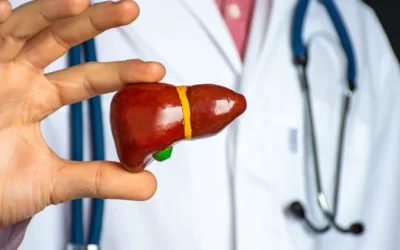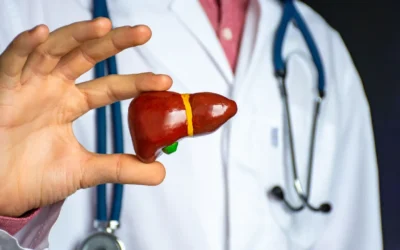

For the modern professional, the recipe for good health is often reduced to a simple equation: eat clean, avoid sugar, and hit the gym. Yet, a growing number of patients are walking into clinics with a confusing diagnosis. They are lean, they are health-conscious, and they rarely touch alcohol—yet their scans reveal Non-Alcoholic Fatty Liver Disease (NAFLD), now increasingly referred to as MASLD (Metabolic Dysfunction-Associated Steatotic Liver Disease).
The missing variable in the equation is cortisol.
The scale of this issue is staggering. Recent data suggests that nearly 1 in 3 adults globally suffers from MASLD. In India, the prevalence is particularly alarming, with studies indicating that up to 32 per cent of the general population is affected. Most notably for the urban workforce, research published in the Journal of Clinical and Experimental Hepatology highlights that roughly 20 per cent of Indian MASLD patients are non-obese or lean, proving that a low BMI is no shield against liver fat when chronic stress is at play.
In this guide, Indian medical experts Dr Vikram Raut, Dr. Vikram Uttam Patil, and Dr. Geeta Malkan-Billa break down the physiological link between chronic stress and liver fat.
The survival mode metabolic switch
Cortisol is often viewed as a temporary ‘fight or flight’ aid—a quick burst of energy to escape a physical threat. However, as Dr Vikram Raut, senior consultant, liver transplant and HPB Surgeon at S.L. Raheja Hospital, explains, constant psychological stress flips a metabolic switch that forces the liver into a state of permanent energy conservation.
“In this mode, cortisol keeps telling the liver: ‘Store energy, don’t use it.’ Persistence stress leads to constantly elevated cortisol levels more than baseline. Cortisol causes fat to break down from belly fat stores and sends it directly to the liver. At the same time, it slows down the liver’s ability to burn this fat,” says Dr Raut.
This creates a perfect storm for fat accumulation. He explains, “The liver begins making new fat from non-dietary sources, such as proteins and sugars already present in the body (a process called de novo lipogenesis). Because stress reduces the efficiency of the liver’s ‘fat-burning engine,’ you end up with more fat entering the organ and less being processed. The liver is not reacting to food alone; it is reacting to stress. That’s why someone can develop fatty liver even without a high-calorie diet.”
Hidden risk in the lean professional
One of the most dangerous myths about liver health is that it is strictly a weight issue. Dr Vikram Uttam Patil, consultant gastroenterologist and hepatologist at Sahyadri Super Specialty, points out that many high-achieving professionals fall into the TOFI (Thin-Outside-Fat-Inside) category.
“A person may have a ‘stress belly’ or abdominal fat without this being a direct indicator of what is occurring inside the liver. Conversely, hepatic fat accumulation may be occurring in a person who is otherwise physically lean. Stress is an important factor in this case. While high levels of cortisol do cause fat to be broken down in peripheral cells, it also causes free fatty acids to be delivered to the liver,” clarifies Dr Patil.
This is a critical distinction for the fit professional. “You may look lean in a mirror, but if your HPA axis (the hypothalamic-pituitary-adrenal system) is dysregulated, your liver could be marbled with fat,” warns Dr Patil. He emphasises that fatty liver is a metabolic disorder, not a weight-status marker. If you experience chronic stress or physical inactivity, your metabolic health must be assessed regardless of your clothing size.
The Circadian Connection
How sleep deprivation becomes a hepatic toxin
Cortisol is meant to follow a strict 24-hour rhythm—peaking in the early morning to provide alertness and tapering off to its lowest levels at night to allow for cellular repair. High-pressure jobs, characterised by late-night emails and always-on mental loops, shatter this cycle.
“In cases of chronic sleep deprivation, the circadian rhythm of cortisol is altered, resulting in higher levels especially during the night. This has major implications. Higher levels of cortisol trigger the production of glucose and insulin resistance, which leads to fat accumulation. At the same time, lack of sleep impacts hunger hormones like ghrelin and leptin, increasing appetite and oxidative stress,” elaborates Dr Patil.
Dr Geeta Malkan-Billa, consultant hepatologist at Dr, LH Hiranandani Hospital, adds another layer to this: the gut connection. “Chronic stress changes gut bacteria and makes the intestine slightly ‘leaky.’ This allows toxins to reach the liver, causing inflammation and making fat storage worse. South Asians are particularly vulnerable to this, as we tend to accumulate more dangerous visceral fat even at lower body weights,” she explains.
The adrenal fatigue
While the term ‘adrenal fatigue’ is popular in wellness circles, it is not a recognized medical diagnosis, according to Patil. However, HPA-axis dysregulation—a malfunctioning stress-response system—is very real and deeply damaging to the liver.
“Prolonged stress causes an abnormality in the HPA axis, leading to a situation of ‘metabolic mismatch.’ The body is in a constant state of stress, yet there is no real physical reason to be in this state. Cortisol increases glucose production and decreases the body’s ability to use insulin. This leaves the liver in a state of constant exposure to excess energy, which is then accumulated in fat deposits,” he shares.
This mismatch means your liver is preparing for a physical battle that never comes, leaving the fuel (fat and sugar) to sit within the organ`s tissue.
Moving beyond the routine blood test
If you’re relying on a standard Liver Function Test (LFT) to give you a clean bill of health, you may be missing the window for reversal.
“The problem is that these tests often remain normal until the disease has already progressed—usually up to 70 per cent liver damage,” warns Raut. “If you are at risk, you need better tools. The most practical test today is Transient Elastography with Controlled Attenuation Parameter (FibroScan), which can quantify liver fat content as low as 5-10 per cent,” he advises.
For those seeking the gold standard, Raut recommends the Magnetic Resonance Imaging Proton Density Fat Fraction (MRI-PDFF). It provides a precise percentage of fat content, making it an invaluable tool for busy professionals who want a clear baseline to monitor if their lifestyle changes are actually working.
The clinical intervention
If cortisol is the trigger, you must learn to interrupt its secretion. Malkan-Billa suggests five physiological circuit breakers that treat stress not as a feeling, but as a biological process that can be halted.
1. The physiological sigh (2 minutes): Two quick nasal inhales followed by a long, slow exhale. This is the fastest biological way to activate the vagus nerve and suppress the stress response.
2. Post-meal walk (10 minutes): By moving after a meal, you force your muscles to absorb blood sugar, which prevents the insulin spike that cortisol uses to drive fat into the liver.
3. Cold water face dip (30 Seconds): Splashing cold water on the face triggers the mammalian diving reflex, which immediately slows the heart rate and lowers cortisol.
4. Box breathing (4 minutes): A rhythmic 4-count inhale, hold, exhale, and hold. Used regularly, this measurably lowers the baseline of the HPA axis.
5. Nature microbreak (5-10 minutes): Studies show that even sitting by a window with a view of trees or water can reduce cortisol levels.
Support through supplementation
While supplements cannot replace stress management, certain nutrients help the liver survive heightened cortisol. Malkan-Billa lists Vitamin E, Omega-3 fatty acids, and B-complex vitamins to protect liver cell health and support the mitochondria—the liver`s energy factories—which often fail under chronic stress.
The work-life boundary as a medical prescription
Perhaps the most overlooked aspect of liver health is the organ`s internal clock. The liver performs its most critical detoxification and repair functions during deep, parasympathetic rest.
“A structured wind-down isn’t a luxury—it’s liver medicine. When cortisol stays high into the evening because you’re checking emails at 11 PM, the liver’s repair cycle gets overridden. A consistent stop time signals to the brain that the threat is over, allowing the system to shift from fight to repair,” says Malkan-Billa.
What a good switch-off ritual looks like:
1. A consistent stop time
Close the laptop at the same time daily. The predictability itself reduces background anxiety.
2. 10 minutes outdoors at dusk
Natural evening light helps reset your body clock, and the movement clears cortisol.
3. A warm shower or bath (40 to 42°C)
The subsequent drop in core body temperature is a powerful biological signal for sleep.
4. Purposeless play
Reading fiction, gentle yoga, music, or cooking — anything that doesn’t involve performance or goals. This quiets the stress centres of the brain.
5. Consistent sleep routine
Maintaining the same sleep routine, even on weekends is the single most powerful way to restore the liver’s natural rhythm.
The hepatic bottom line
Stress-induced fatty liver is a silent epidemic among the urban workforce. As the experts have demonstrated, your liver does not distinguish between the fat made from a burger and the fat made from a high-pressure board meeting—the cellular damage is identical.
For the modern professional, a hepatology consultation must go beyond ‘eat less, move more.’ It must address HPA axis activation, sleep hygiene, and the psychological load of the job. These wellness strategies are, in fact, hard medical interventions. Recognising the cortisol-liver connection is the first, and perhaps most important, step toward genuine longevity.