[[{“value”:”
The contentious Video Assistant Referee (VAR) was at the heart of controversy yet again as West Ham United hosted Arsenal in a high-stakes London derby. A 92nd-minute decision, which could decide the fate of teams at both ends of the Premier League table, became the latest flashpoint in VAR`s turbulent history since its inception.
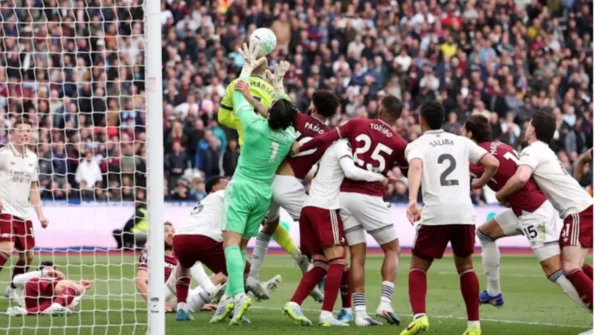
Callum Wilson`s last-gasp equaliser was ruled out for a foul on Arsenal goalkeeper David Raya, as the Gunners held on for a 1-0 win that took them closer to their first league title since 2004.
While the goal was being celebrated at the Hammers` home ground, the London Stadium and in the blue part of Manchester, there was always a lingering feeling of VAR’s impending interference in the background. West Ham United`s worst fear eventually came true as the referee was ordered to the pitchside monitor to watch the replay in slow motion and from different angles, eventually concluding that the keeper was fouled in the process of the goal being scored.
The ‘Clear and Obvious’ VAR Dilemma
While there could be many arguments about the foul and its repercussions, VAR has failed to deliver what it was introduced for. The system was brought in with a simple promise of ‘minimum interference, maximum benefit’, something it has quite evidently not lived up to.
The system designed to help the referee with ‘clear and obvious errors’ is causing fans to fall out of love with the game they once enjoyed. The thrill of scoring has been replaced by an anxious wait, and the joy of a last-minute winner must now be put on hold while an official, sitting miles away from the stadium, decodes every movement in slow motion and from multiple angles, almost as if searching for a reason to disallow the goal.
West Ham`s equaliser in the 92nd minute was disallowed after the referee watched the replay 17 times. It took the referee and the VAR official more than three minutes to reach a decision that might look right in hindsight but was not ‘clear and obvious’ by any means.
Although VAR has brought much-needed precision to offside decisions, the frequent disqualification of goals is draining the enthusiasm from the matchday experience. The instinctive celebration and the immediate rush to restart the game have been traded for agonisingly long reviews that take the emotion out of the game.
The goal of the ‘clear and obvious’ rule was to support referees, but it is actually doing the opposite. Instead of making definitive decisions, referees are now second-guessing themselves, knowing that a computer will check their every move.
By focusing too much on being perfect and getting every 50-50 decision right, the game is losing its heart. When we spend more time looking at screens than watching the ball, the magic of football disappears.
“}]]